
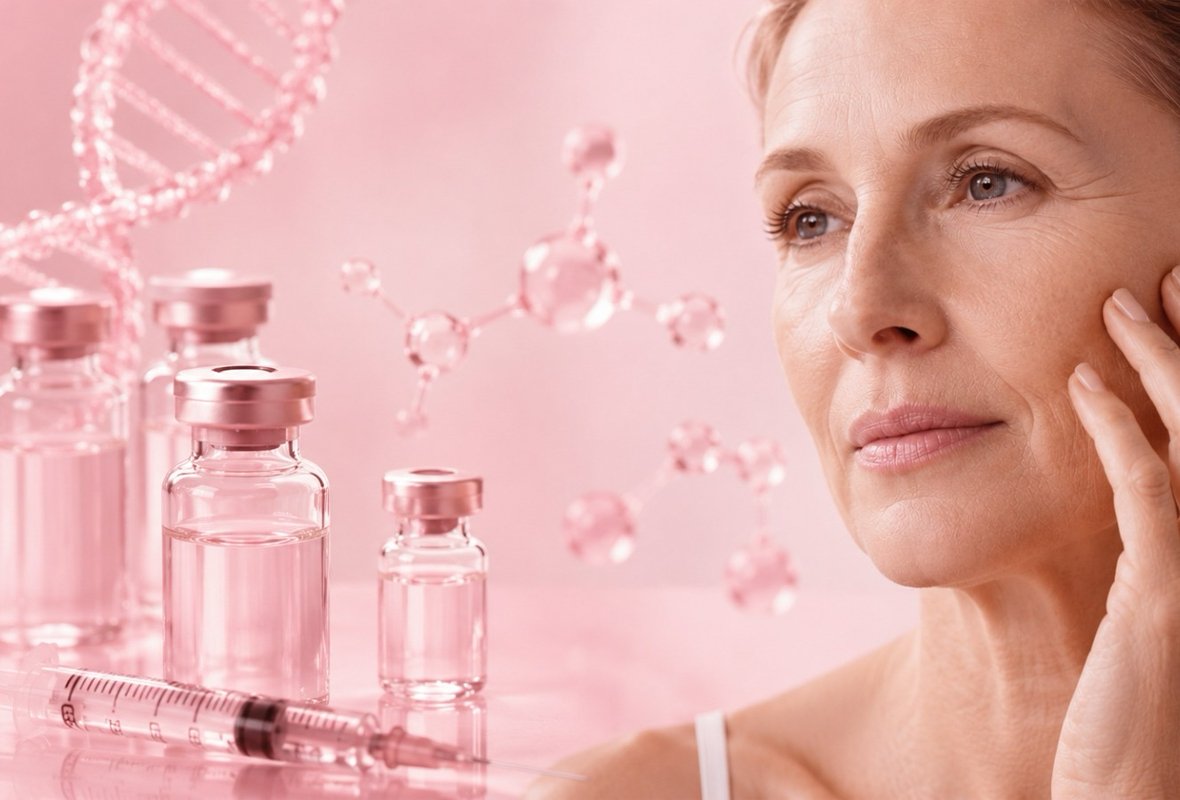
Have you noticed that your body seems to respond differently after 40?
Losing weight takes more effort. Muscle seems harder to maintain. Recovery is slower. Skin changes. Energy isn’t quite what it used to be. And during perimenopause and menopause, all of this can happen alongside major hormonal and metabolic changes.
This is one reason peptide therapy has become such an interesting area in women’s health.
At Medi-Gyn, we are seeing more women ask about peptides for weight management, healthy aging, recovery, body composition, and overall well-being. And understandably, they want to know what these treatments actually do.
The answer is not as simple as naming one “best” peptide.
Different peptides work through different pathways. Some are already well established in clinical medicine, while others are being explored in regenerative and longevity medicine.
Our role is to look at the individual woman first, then determine whether peptide therapy has a place in her personalized health plan.
How Can Peptide Therapy Help Women?
Peptides are short chains of amino acids that act as signaling molecules in the body. Depending on the peptide, they can influence pathways involved in metabolism, growth-hormone signaling, tissue repair, and other biological functions.
That is why peptide therapy is attracting attention across several areas of women’s health.
Here is a simple way to understand where different peptide approaches may fit:
| Peptide / therapy | Women’s health area of interest | What it may support |
|---|---|---|
| GLP-1 receptor agonists | Weight and metabolic health | Appetite regulation, weight management and improved metabolic health |
| CJC-1295 / Ipamorelin | Body composition and recovery | Growth-hormone signalling, with potential interest in lean body composition and recovery |
| BPC-157 | Tendon, ligament, muscle healing | Cellular and tissue-repair pathways |
| TB-500 / Thymosin Beta-4-related peptides | Recovery | Tissue-repair and recovery pathways |
| GHK-Cu | Skin and healthy ageing | Skin and tissue-related pathways, including collagen-related processes |
| Kisspeptin | Reproductive health | Signalling involved in reproductive hormone pathways |
The important thing is that these treatments are not interchangeable. Each has a different purpose and a different body of research behind it.
That is exactly why we begin with assessment rather than simply recommending a peptide.
Peptide Therapy in Dubai for Weight Management
Weight gain is one of the biggest reasons women become interested in peptide therapy. And for women in midlife, it can be particularly frustrating.
You may be eating much the same way you always have, yet the scale has started moving in the wrong direction. Menopause care can change body composition and fat distribution, and metabolic health can also become harder to manage.
This is where GLP-1 receptor agonists have attracted considerable attention.
Research on peri- and postmenopausal women suggests that GLP-1 receptor agonists can be valuable tools for weight management. However, more research is still needed in this population. Read the PubMed review on GLP-1 therapy in peri- and postmenopausal women.
More recent 2026 research is also exploring how GLP-1-based weight-loss treatments may intersect with other aspects of women’s midlife health. Read the 2026 Menopause review.
At Medi-Gyn, we don’t look at weight in isolation. We consider the wider picture — hormones, metabolic markers, lifestyle, nutrition, body composition and your health history — before deciding what approach is appropriate.
If stubborn weight gain is becoming a concern, speak with our medical team rather than choosing a peptide yourself. We can assess whether peptide therapy is appropriate for your individual goals.
Peptide Therapy in Dubai for Healthy Aging and Body Composition
Healthy aging is not simply about looking younger. For women, maintaining muscle, supporting recovery and preserving a healthy body composition become increasingly important with age.
This is one reason peptides linked to growth-hormone signaling and regenerative medicine are attracting interest.
CJC-1295 and ipamorelin, for example, are discussed in relation to growth-hormone pathways and body composition. Other peptides, including BPC-157 and thymosin-related therapies, are being explored for tissue repair and recovery.
At Medi-Gyn, these therapies are considered as part of a broader personalized program rather than as standalone “anti-aging injections.”
That personalized process matters because women do not age the same way. One woman may need support with body composition. Another may be more concerned about recovery and physical performance. Someone else may want to focus on healthy aging and overall vitality.
The treatment should reflect the person.
Book an online consultation with Medi-Gyn!
What About Peptides for Skin and Healthy Aging?
This is another area where women are increasingly curious.
GHK-Cu and other peptides are being studied for their potential role in skin and tissue-related processes. Peptide-based approaches have therefore become part of the wider conversation around regenerative and healthy-aging medicine.
At Medi-Gyn, we take a whole-body approach to this area.
Our peptide programs may involve a detailed medical and lifestyle history, diagnostic testing and review of relevant health markers before an individual protocol is created. Our published program information includes markers such as glucose, HbA1c, lipids, liver and kidney function, thyroid markers, vitamin D and selected hormones. See Medi-Gyn’s peptide therapy assessment process.
Want to know whether peptide therapy could support your healthy-aging goals? Book a consultation with the Medi-Gyn team and let our doctors assess your individual needs.
Why Choose Medi-Gyn for Peptide Therapy in Dubai?
Peptide therapy works best when it is not treated as a trend.
At Medi-Gyn, we combine peptide therapy with our wider expertise in hormone health, menopause care, functional medicine and regenerative medicine.
Our approach follows four simple principles: preventative, precision, personalized and partnership.
We start by understanding your story. What has changed? When did it begin? What are you trying to improve? What does your current health picture look like?
From there, our doctors can review your medical history, symptoms, and relevant diagnostic information before developing an individualized protocol.
And you don’t necessarily have to travel to Dubai for the first conversation. Medi-Gyn offers online consultations, allowing women to discuss their concerns with the medical team from wherever they are. Depending on your program, your assessment may include a detailed health and lifestyle history, diagnostic testing, and a review of your results before your personalized protocol is created.
Is Peptide Therapy Right for You?
No single peptide is right for every woman. And that is actually good news.
It means your treatment does not have to be based on whatever happens to be trending on social media.
We can look at you first — your health, your goals and your individual needs — and then determine whether peptide therapy is the right tool.
At Medi-Gyn, that is the approach we believe in. Peptides can be a valuable part of modern regenerative and metabolic medicine. But their greatest value comes when they are used thoughtfully, alongside proper assessment and ongoing medical guidance.
If you are searching for peptide therapy in Dubai, start with a conversation with an experienced medical team rather than trying to work out your treatment from an online peptide list.
Book a consultation with Medi-Gyn to explore whether a personalized peptide program could be right for you.
Certain peptide-based treatments may be considered for specific concerns that can occur during perimenopause and menopause, such as changes in weight, body composition, recovery, and metabolic health. However, peptide therapy is not a replacement for appropriate menopause assessment or hormone treatment when indicated. The right approach depends on the individual woman.
Potential applications depend entirely on the peptide being considered. Different therapies may be discussed in relation to weight management, metabolic health, muscle maintenance, recovery, skin health, and healthy aging. The evidence and regulatory status vary considerably between individual peptides.
There is no single “best peptide” for women over 40. A woman experiencing weight gain may have very different needs from someone concerned about recovery, body composition, skin changes, or menopause symptoms. Medi-Gyn therefore recommends assessment before considering a personalized peptide program.
Some peptide-based medicines, particularly GLP-1 receptor agonists, have strong clinical evidence for weight management in appropriate patients. For women experiencing midlife weight changes, treatment should form part of a wider assessment of metabolic health, hormones, nutrition, lifestyle, and body composition.
Certain peptides, including GHK-Cu, have been investigated for skin-related processes such as collagen activity, tissue remodeling, and repair. However, results and evidence vary by peptide and formulation, and peptide therapy should not be presented as a treatment that reverses skin aging.
These compounds are frequently discussed online in relation to tissue repair and recovery, but their clinical evidence and regulatory status differ substantially from established medicines. They should not be presented as proven treatments for women’s health without appropriate qualification.
Potentially, but only after individualized medical assessment. Peptide therapy and menopausal hormone therapy target different biological pathways and are not interchangeable. A clinician should consider symptoms, medical history, medications, hormone status, metabolic markers, and treatment goals before recommending a combined approach.
Yes. Medi-Gyn provides online consultations for women worldwide, allowing patients to discuss peptide therapy, hormone health, menopause, weight management, and healthy-aging concerns with the medical team without needing to be in Dubai for the initial conversation. Where appropriate, the clinician can recommend further testing and develop a personalized plan subject to local medical and prescribing regulations.

