
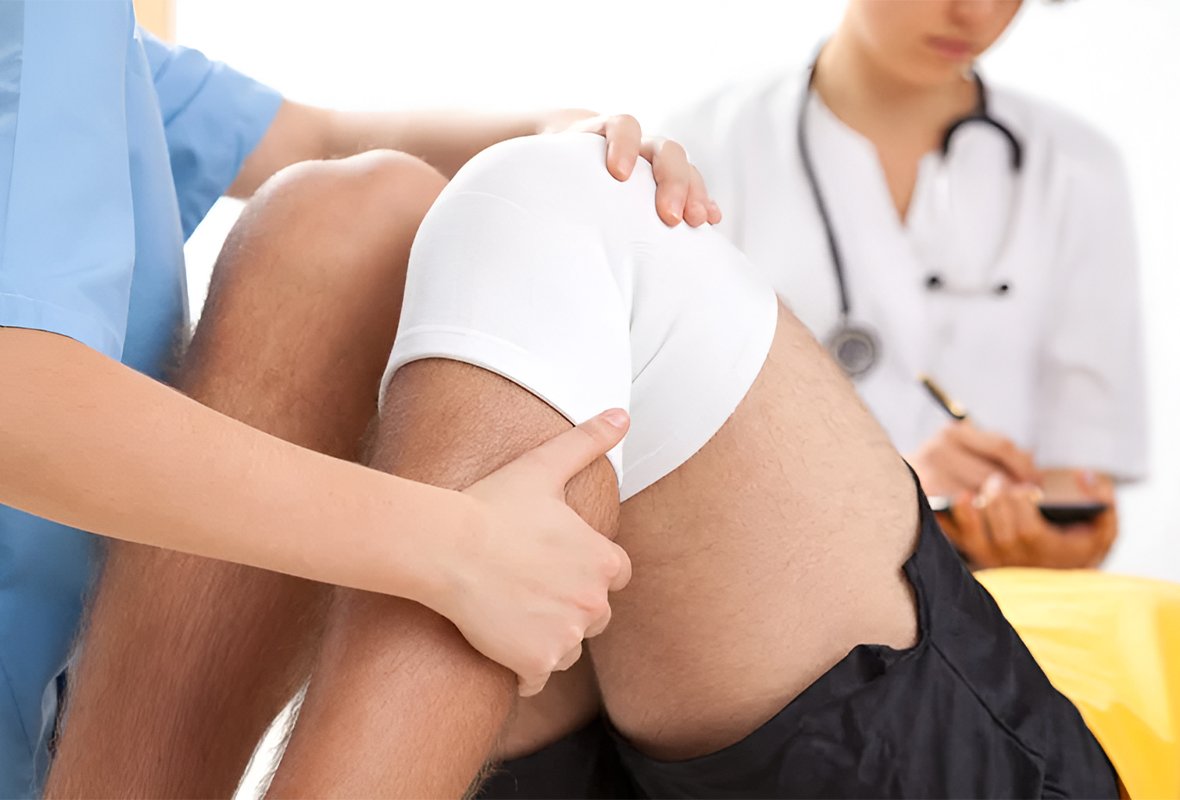
Nobody really talks much about this part of the recovery process.
It is not always the pain. Sometimes it is the hesitation that comes after. You are walking fine, maybe even feeling almost normal, but then you have to put full pressure on that knee or move that shoulder a certain way, and suddenly you think twice.
- Can I do this now?
- Is it actually okay?
And even when the pain starts going away, getting back to the same level you were before takes time. Today, people are looking at different ways to support recovery. Peptide therapy for sports injuries in Dubai is one approach getting attention lately, for its promising role in tissue repair and recovery.
Medi-Gyn has been helping a lot of sports enthusiasts from all over the world get back to their earlier level of performance through peptide therapy. But what exactly are peptides, and where do they fit into sports injury treatment? Let’s get into that.
So, What Are Peptides Actually Doing?
Peptides are basically short chains of amino acids — the same building blocks that make proteins, just smaller.
Our body already uses peptides as signalling molecules. They are involved in different processes, including inflammation, tissue repair, growth and recovery.
And this is where the interest comes in.
If certain peptides can influence some of these repair signals, could they also help the body recover after an injury?
That is what researchers are trying to understand.
Peptide Therapy for Sports Injuries in Dubai: Why the Interest?
So, why are peptides suddenly part of the sports recovery conversation?
A big part of the interest comes from the way some peptides may communicate with cells and influence processes involved in healing. The idea is not simply to mask the pain, but to support a complete healing and recovery.
Researchers are looking at their possible role in areas such as:
- Supporting tissue repair and regeneration
- Helping regulate inflammation after injury
- Supporting the formation of new blood vessels
- Influencing fibroblast activity, which is important for tissue repair
- Supporting muscle and connective tissue recovery
That is basically where peptides enter the conversation. This overlaps closely with peptide therapy for anti-ageing and recovery, where the same repair and regeneration pathways are relevant to performance and long-term wellness.
BPC-157 and TB-500: Peptides for Sports Injury Recovery
There are different types of peptides being discussed in the recovery space. Two names that come up quite often are BPC-157 and TB-500.
But what exactly are they, and why are athletes and active people interested in them?
BPC-157
A 15-amino-acid peptide that has been studied for its possible effects on tendon, ligament, muscle and bone healing. This is the area most closely linked to peptide therapy for musculoskeletal injuries.
Research has looked at its relationship with:
- Blood vessel formation
- Fibroblast activity
- Tissue repair
- Inflammatory responses
TB-500
TB-500 is related to thymosin beta-4, a naturally occurring peptide involved in cell movement.
It has been studied in areas such as tissue repair, wound healing and cell migration.
So, yes, there is some interesting science behind why these peptides are being discussed.
But there is an important “however” here.
Much of the research on BPC-157 and TB-500 is still preclinical or based on animal studies. Human evidence is much more limited. Peptide therapy for sports injuries in Dubai remains promising — but it needs proper medical guidance, which is exactly how Medi-Gyn approaches it.
Peptide Therapy for Sports Injuries in Dubai: What to Consider
This is where the conversation needs to become a little more practical.
Peptide therapy is not one single treatment. Different peptides have different actions, different research behind them and different levels of evidence.
So the question is not simply, “Do peptides work?”
It is more like:
- Which peptide?
- For what injury?
- What does the available evidence actually show?
- Is it appropriate for this particular person?
And with a sports injury, the starting point should always be understanding what is actually injured.
Once that is clear, the different recovery options can be looked at properly — including whether peptide therapy has a place in that particular recovery plan. Do consult with the experts to get the best out of peptide therapy for sports injuries.
Why Choose Medi-Gyn for Peptide Therapy for Sports Injuries in Dubai?
So, where does all this leave someone who is actually dealing with a sports injury?
You may have read about BPC-157, TB-500, collagen peptides, recovery protocols and all the other options available today. But knowing the names is one thing. Knowing what actually makes sense for your injury is another.
This is where Medi-Gyn takes a more personalised approach.
Medi-Gyn is an online Hormone Health & Regenerative Medicine Center based in Dubai, offering personalised care to clients around the world. The focus is not simply on giving you a peptide and sending you on your way.
The process starts with understanding you and your condition.
Your program may include:
- Online consultation and detailed medical history
- Diagnostic testing where needed
- Review of your results with the medical team
- A personalised functional protocol
- Clear explanation of the recommended treatment
- Follow-up and ongoing mentorship
And that personalised part matters.
Two people can have what sounds like the same sports injury and still need completely different recovery plans. Your training level, age, injury history, symptoms, test results and overall health can all affect the approach. Body composition is often part of that picture too, which is why some clients also explore peptide therapy for weight management alongside their recovery protocol.
Medi-Gyn also offers online consultations, making it possible for sports enthusiasts outside Dubai to access the centre’s services from different parts of the world.
Peptide Therapy Should Be Part of a Bigger Recovery Plan
It is tempting to look at peptides as a shortcut — something that will get you back to training faster.
But recovery is rarely that simple.
Proper diagnosis, rehabilitation, progressive exercise, good nutrition, sleep and sensible training loads still matter. Nutrient absorption plays a quiet but real role here as well, which is why peptide therapy for gut health sometimes forms part of a wider recovery conversation. Peptide therapy, where considered appropriate by a qualified clinician, can be explored as part of that bigger picture.
Recovery is not only physical either. Focus, motivation and mental clarity all shape how consistently someone returns to training, and some clients look at peptide therapy for brain health for that side of performance. Others explore peptide therapy for skin and hair health as part of a broader wellness plan.
If you are looking for peptide therapy for sports injuries in Dubai, Medi-Gyn offers a personalised, medically guided approach rather than a one-size-fits-all protocol.
The goal is not simply to recover from an injury.
It is to understand your body, support the healing process, and work towards getting back to doing what you love.
The evidence depends on the peptide. Some have shown interesting results in laboratory and animal research. However, many popular injury-recovery peptides still have limited human clinical evidence.
No. Physiotherapy, progressive strengthening, proper rest, nutrition, sleep, and sensible training are still important parts of injury recovery. Peptide therapy, when considered appropriate, should not replace rehabilitation.
There is no single peptide that is right for every injury. The choice depends on the type of injury, your health history, symptoms, goals, and available clinical evidence. A proper medical assessment should come first.
Medi-Gyn offers personalized peptide therapy programs through online consultations. The process can include reviewing your medical history, diagnostic results, and individual recovery goals before creating a tailored protocol.

