
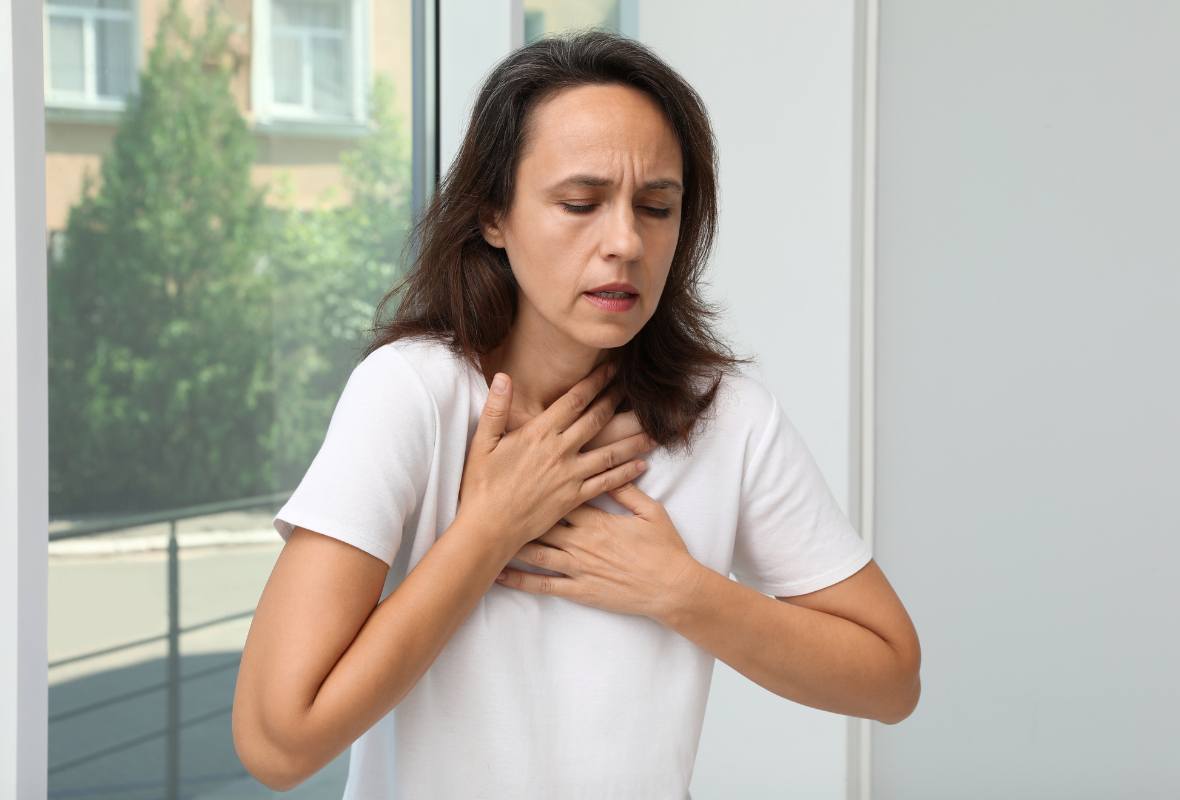
Did you ever have a pause in conversation in the middle of a sentence? To get a breath of relief? It can feel strange and a little unsettling, too. Are you in a menopause period? Do you have irregular cycles, hot flashes, or night sweats?
Shortness of breath is also a frequent occurrence among many women experiencing menopause at unexpected times, such as when climbing stairs, walking a few feet, or even resting.
It’s one of those symptoms that doesn’t get talked about enough.
Let’s break it down in a simple way.
What does breathlessness during menopause feel like?
It can be as simple as a feeling that you do not breathe as easily as you did so far. You might feel like taking deeper breaths… or feel your chest tighten.
In other women, it is accompanied by anxiety. May women feel breathless, just like that, no other symptoms.
And the first question, of course, is—why is this happening now?
Why does menopause cause breathlessness?
The main reason? Hormonal changes.
As estrogen levels drop, your body goes through several adjustments. And yes, your lungs and breathing patterns are part of that shift too.
Here are a few common causes:
Estrogen plays an important role in how your body controls breathing. At low Estrogen levels, you feel like you have a little breathing problem. It’s subtle—but noticeable.
Menopause may be an emotional high and low. Tight chest and shallow breath are often linked to anxiety.
Lung capacity decreases as we age. Menopause can make this more obvious.
Hormones also affect heart health. Therefore, variations in hormone levels may occasionally manifest as breathlessness.
Even the slightest changes in weight or energy can make breathing feel heavier than usual.
It’s rarely just one reason. In the majority of cases, it is a combination of things.
When should you pay attention?
A little breathlessness now and then can be part of the transition.
But when it feels frequent or intense, it’s worth a medical check-up.
Especially if you notice:
In such cases, don’t ignore it. Listen to your body and take steps to keep yourself healthy and comfortable.
How can you manage breathlessness during menopause?
In modern times, when medicine has made tremendous progress and personalized approaches yield significant results, you have effective ways to manage breathlessness and focus on your overall wellness.
Many women find a clarity on the situation when they understand the facts behind hormone level fluctuations and imbalances during the menopause period.
At Medi-Gyn, one of the major online Hormone Health and Regenerative Medicine centres in Dubai, the emphasis is not only on the <a href=” https://medi-gyn.com/early-menopause-symptoms-best-menopause-specialists-dubai/”>symptoms </a>but also on the cause.
They do not guess but examine your hormonal profile.
They determine what is really going on in your body through high-tech diagnostics, such as blood tests and functional medicine methods.
Medi-Gyn adheres to Dr. Hertoghe’s hormone approach, which aims to restore balance through bioidentical hormones (plant-derived, identical to the hormones in the body), micronutrients, and custom care.
The goal isn’t just relief. It is making you feel yourself once more.
Even minor steps are beneficial:
A few minutes a day will help to make breathing easier.
Every woman’s body responds differently.
That’s why Medi-Gyn offers tailored 2-month programmes for menopause, hormone balancing, and longevity.
It usually starts with a quick 15-minute consultation. From there, a full plan is created based on your symptoms, lifestyle, and test results.
Their approach combines conventional medicine with functional and integrative care—so nothing is overlooked.
Why are many women from all over the world choosing Medi-Gyn?
That is why women in the UAE, Kuwait, Saudi Arabia, Oman, Qatar, and even in China are rushing to Medi-Gyn.
It’s simple. Everything is designed to work around your life.
From consultation to diagnosis to receiving your personalised protocol and supplements—everything is handled online, with global delivery support.
You’re guided at every step. Not rushed. Not confused.
Just clear, thoughtful care.
A quick word before you move on
Menopausal breathlessness is initially frightening.
However, once you know what is behind it, things begin to fall into place.
And it is controllable.
Sometimes all one needs is the proper encouragement and a closer examination of what your body is requesting.
Yes, breathlessness can occur during menopause due to hormonal fluctuations, especially declining estrogen levels. While common, it is often overlooked compared to other symptoms like hot flashes.
It may feel like difficulty taking a deep breath, chest tightness, or sudden shortness of breath—even during light activity or rest. Some women also experience it alongside anxiety.
Estrogen plays a role in regulating breathing and lung function. When levels drop during menopause, it can affect breathing patterns, making you feel breathless.
Yes, menopause-related anxiety or panic episodes can lead to shallow breathing, chest tightness, and a feeling of breathlessness.
You should seek medical advice if breathlessness is frequent, severe, or accompanied by symptoms like chest pain, dizziness, or rapid heartbeat.
In some cases, hormone therapies like Bioidentical Hormone Replacement Therapy (BHRT) may help reduce symptoms by restoring hormonal balance.
Simple lifestyle changes can help, including:
Yes, even slight weight gain can put extra pressure on the lungs and make breathing feel more difficult.
Doctors may recommend blood tests, hormone profiling, or heart and lung evaluations to rule out other causes and understand your condition better.
Yes, with the right approach—combining medical treatment, hormone balancing, and lifestyle changes—breathlessness can be managed effectively.
Error: Contact form not found.


