
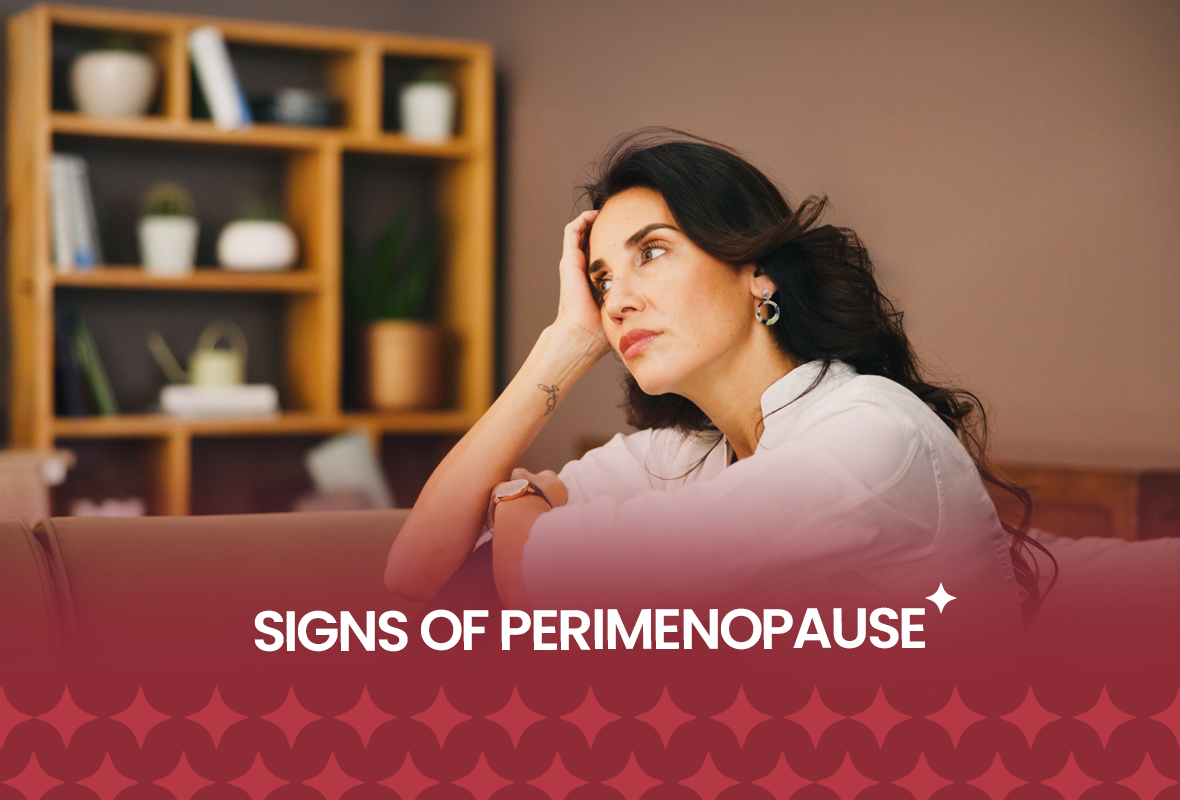
Sometimes, It Begins with a Question
“Why do I feel different when nothing in my life has changed?”
You may be sleeping the same number of hours, but feeling tired when you wake up. You are starting to forget little things more often. Periods are irregular. One week you feel burned out and the next week you’re fine. None of these changes seems important enough to worry about, yet together they leave you with a feeling that’s difficult to explain.
One of the most common things women say during perimenopause isn’t “I’m having symptoms.” It’s simply, “I don’t feel like myself.”
That feeling deserves attention.
The Signs Rarely Arrive as We Expect
Perimenopause doesn’t announce itself through a standard set of symptoms.
It usually happens gradually, with a series of seemingly unimportant changes. A sleepless night this time. You become short-tempered. A week late period. A growing dislike for clothes that once fit comfortably. None of these moments feels dramatic, so they rarely seem connected.
It’s only when you look back that the pattern becomes obvious.
Not All Signs of Perimenopause Are Physical
Part of the confusion around perimenopause is that some of its initial symptoms aren’t physical in nature.
You may become less patient with people you love. You may get less confident at your job than you used to be. You enter a room and can’t remember what it’s for. You discover you’re not quite yourself anymore!
These moments can be easily overlooked as stress or aging or just a way of life.
But hormones influence the brain just as much as they influence the ovaries. They affect sleep, memory, emotions, focus and resilience. Once those hormone levels start to shift, your brain will likely sense it first, before your body.
Why Perimenopause Is Easy to Overlook
Throughout their lives, women adapt in many ways. They adapt to a jam-packed work schedule, a changing family, aging parents, growing children, and a myriad of daily tasks. When their bodies start to change, adaption is often the first reaction.
They blame stress.
They try to get better sleep.
They buy vitamins.
They decide to do exercise more.
All of those are okay. But at times they are not the right solution. Identifying the root cause of these changes are the most important to decide upon the right solution.
If these changes have quietly become part of your everyday life, it may be time to look beyond the obvious.
Book a consultation with the specialists at Medi-Gyn, a trusted perimenopause clinic in Dubai.
Hormones Affect More Than Your Menstrual Cycle
People talk about hormones as if they are only involved in reproduction.
In reality, they do much more.
They influence how deeply you sleep, how your body uses energy, how easily you recover from stress, how your brain processes information, and even where your body stores fat.
That’s why perimenopause doesn’t look the same for every woman. Many factors, including thyroid function, nutrition, stress, metabolism, gut health, and overall well-being, shape your hormonal health.
Looking at one symptom rarely tells the whole story. Looking at the whole picture often provides the answers.
Why a Root-Cause Approach Matters
Many women spend months—or even years—treating one symptom after another.
Something for sleep.
Something for anxiety.
A diet plan for weight gain.
Something for irregular periods
Occasionally those treatments do work. Sometimes they don’t.
The difference lies in understanding whether those concerns are separate or connected. A root-cause approach goes beyond symptom management to identify the root causes of the hormonal imbalance. Functional Medicine looks at the whole picture, including the interactions between lifestyle, nutrition, inflammation, metabolism and hormonal function, rather than individual issues.
Looking for a Trusted Perimenopause Clinic in Dubai?
When looking for a perimenopause clinic in Dubai, it is important to choose the right support to make a difference in your life.
At Medi-Gyn, your consultation doesn’t begin with a checklist of symptoms. They begin with your story. At what point did you realize something had changed? What has been different over the past year? How have those changes affected your daily life?
That wider perspective helps uncover patterns that individual symptoms often hide.
Medi-Gyn combines evidence-based Medicine and Functional Medicine principles to identify root causes of hormonal imbalance. In addition to lifestyle advice and continuous monitoring, women who are an appropriate candidate also receive Bioidentical Hormone Replacement Therapy (BHRT) as part of a customized treatment plan.
Hormone balancing treatment in Dubai isn’t just about managing perimenopause. It’s about helping you feel healthier, stronger, and more like yourself again.
Even if you live outside Dubai, expert care is still at your fingertips with Medi-Gyn’s online consultations.
Each woman’s perimenopause phase is unique. And so should be your treatment
Book an online consultation with Medi-Gyn experts now!
Perimenopause doesn’t have to be frightening.
Nor is it something that can be neglected.
It’s a transition, and like every transition, it’s easier to navigate when you understand what’s happening.
The signs aren’t always loud. Sometimes they’re hidden in the little ways your daily life has changed. Paying attention to those early signals allows you to seek the right support, ask better questions, and move through this phase with greater confidence.
The sooner you understand the change, the sooner you feel better.
Explore perimenopause care at Medi-Gyn!
FAQs
- How long does perimenopause usually last?
Perimenopause typically lasts between 4 and 8 years, although the duration varies from woman to woman. - Can lifestyle changes help during perimenopause?
Yes, a balanced diet, regular exercise, quality sleep, and stress management can support hormonal health and overall wellbeing. - When should I consult a doctor about perimenopause?
If your symptoms begin affecting your daily life, relationships, sleep, or overall health, it’s a good time to seek professional advice. - Can hormone imbalance be treated without surgery?
Yes, many women benefit from personalized approaches such as lifestyle changes, Functional Medicine, medications, or BHRT when clinically appropriate.

